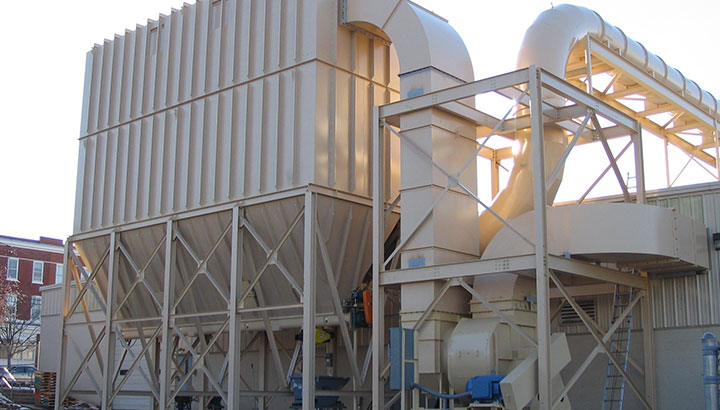
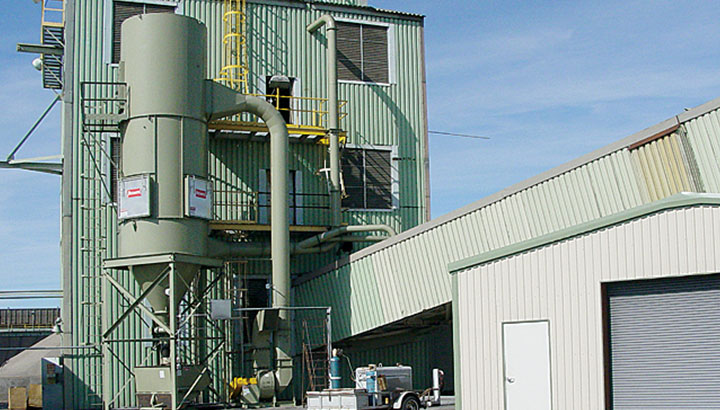
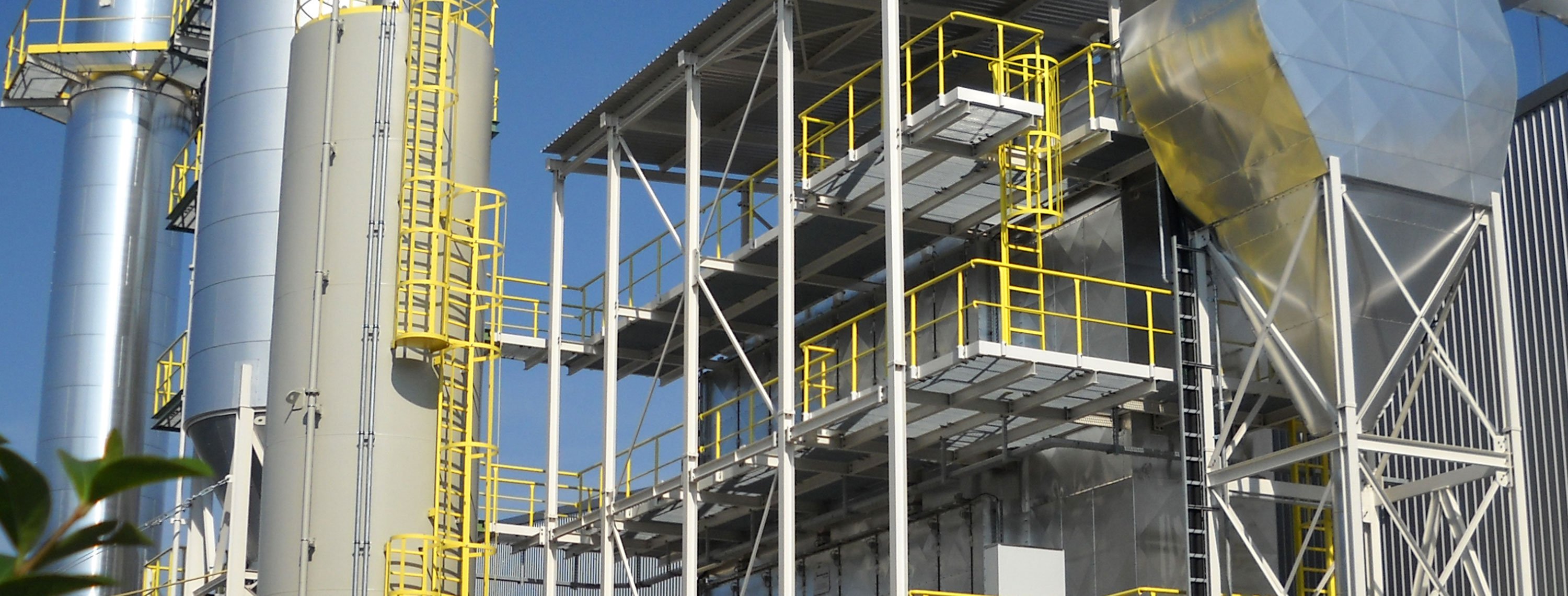
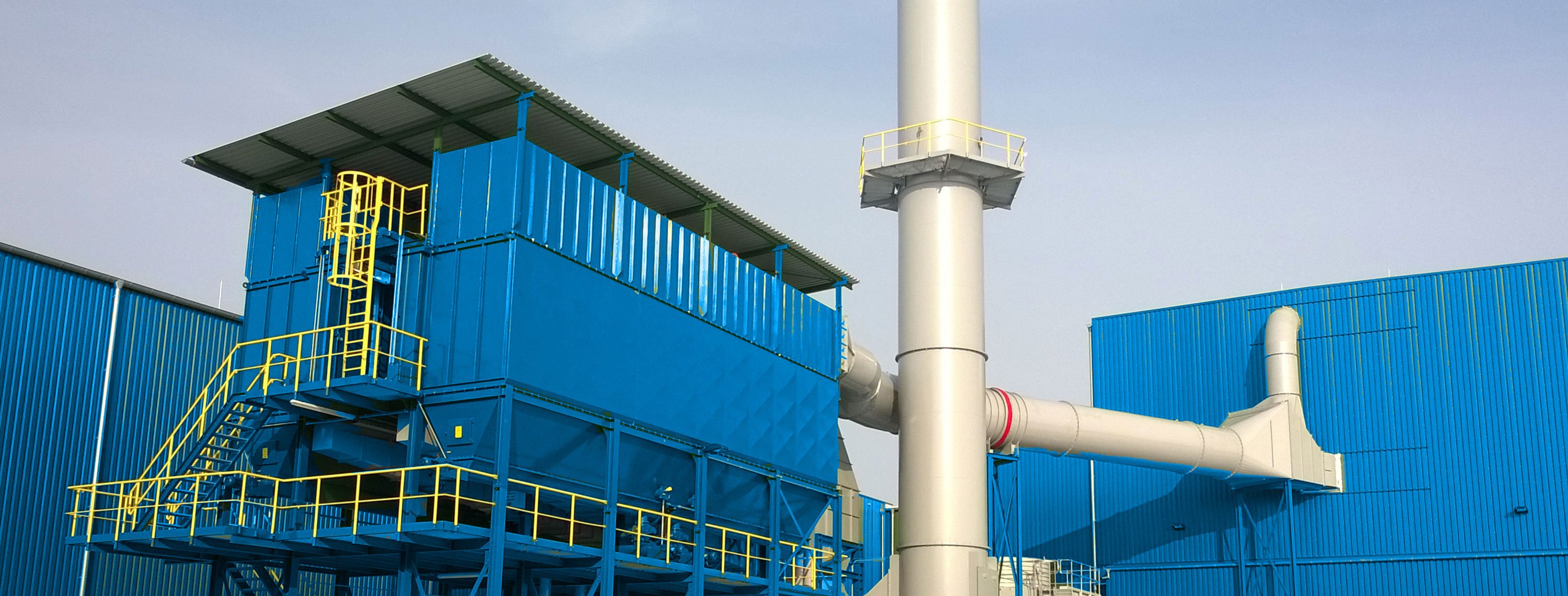
Baghouse dust collectors 

Industrial baghouse dust collectors by cleaning method

In general baghouses filter by building up a dust cake on their bags. But what is the best way for the filter cake to come off the bag? A compressed-air pulse or a reversed air flow. The choice can affect your energy use and your bag life in different applications.

FS-dust-collector-card1

Definition

What is an industrial baghouse dust collector?

An industrial baghouse dust collector is a dry filtration system that separates particulate from an air stream using fabric media, then cleans that media in place rather than replacing it.

Dust-laden air enters a housing filled with filter bags. Particulate accumulates as a cake, usually on the outside of the bag, while clean air passes through the media and out. An integral cleaning system periodically dislodges the cake into a hopper below.

Nederman MikroPul's range of baghouse dust collectors handles foundry / smelter fumes, dust, hot gasses, saw dust, hazardous dusts, chemical by-products, limestone, clinker dust, silica, fine powders, active pharmaceutical ingredients, grain dust, sugar, flour and other food particulates, and combustible dust, among others. Airflow can run from the outside to the inside of the bag or the other way around, depending on the application.

Why Choose Nederman MikroPul Baghouse Dust Collectors?

Advanced Filtration
Energy Efficient

Our baghouse dust collectors employ state-of-the-art filtration media that effectively capture a wide range of particle sizes, from large debris to sub-micron dust. This ensures a cleaner, safer environment for your employees and complies with stringent environmental regulations.

Every industrial process is unique. We offer customizable designs to meet the specific needs of your operation, whether it's heavy dust loads, high temperatures, or abrasive materials.

Designed with energy conservation in mind, our systems optimize airflow and reduce power consumption, lowering your operational costs without compromising performance.

Built with high-quality materials, Nederman MikroPul's baghouse dust collectors are engineered to withstand harsh industrial conditions, ensuring long-lasting reliability.

Our user-friendly designs allow for straightforward access to filter bags and components, reducing downtime and maintenance costs.
Improved Air Quality
Protect workers' health by reducing airborne contaminants
Regulatory Compliance
Meet OSHA, EPA, and local standards for air emissions
Longer Bag Life
Reduce wear and tear on machinery caused by dust infiltration
Enhanced Productivity
Minimize downtime associated with dust-related issues

Cleaning Methods

Ways a baghouse cleans

Bag filters are designed to be cleaned when they clog, not replaced. Baghouse dust collectors can be cleaned by reverse air or by air pulse. Nederman MikroPul manufactures both types of systems.

Offline Cleaning · No Compressed Air

Reverse Air Flat Bag

A cleaning carriage moves from row to row. Above the cleaning air radial fan, a valve pulses air through a telescopic pipe, inflating each bag and reversing the flow to release the dust cake — without compressed air.

FS flat bag collectors >


Milliseconds · Compressed Air
Sectional Pulse Jet Dust Collectors

Pulse Jet

A pulse of compressed air is blasted through the bags to blow loose the built-up particles and maintain optimum filtration efficiency. Used when it is impractical to shut the collector down to clean the bags.

Pulse jet collectors >

Every 120 s · No Compressed Air
Reverse Air Filters

Reverse Air Tubular Bag

Bags are cleaned by high volume, low pressure reverse air every two minutes. A continuous cleaning system avoids the need for compressed air and unreliable valves entirely.

Reverse air filters >

Reduce your carbon footprint

The FS flat bag filter is characterized by space and energy efficiency. Its proven reverse air cleaning system can significantly reduce energy consumption compared to compressed air cleaning.

  • Guaranteed low emissions
  • Low wear on parts
  • Oversight via IoT
Speak with an expert

Selection

Which industrial dust collector fits your process?

CollectorCleaning methodMedia area / dutyCommon applications
Modular pulse jet
Mikro-Pulsaire™
Compressed air pulse151 – 8,246 ft²Size reduction machinery, spray dryers, separators, calciners, mixers, packaging machines, conveyors, chemical manufacturers, foundries, grinders
Multi-modular pulse jet
sectional
Compressed air pulse> 4,500 ft²Kilns, boilers, dryers, mixers, coke pushing systems, sinter strand systems, furnaces, ladle casters, foundry sources, smelters, chemical
Round pulse jet
cylindrical
Compressed air pulseHigh vacuum or
high pressure duty
Spray drying, separating, coal grinding, mixing, food manufacturing, rail car loading, product receiving
Reverse Air Filter
RAF II
Reversed low-pressure air flowContinuous cleaning
no compressed air
Applications where bags need to be constantly cleaned
Reverse Air Filter
RAF-IS
Reversed low-pressure air flowLedge-less housing,
no internal electrical components
Highly combustible dust and high temperature: coal (including PRB), wood, agro
FS flat bag
horizontal
Reversed low-pressure air flowGases up to 250 °CFoundries, steel mills, nonferrous metals, asphalt, galvanizing plants, glass

Family 1 — Reverse Air Flat Bag

FS reverse air flat bag filters

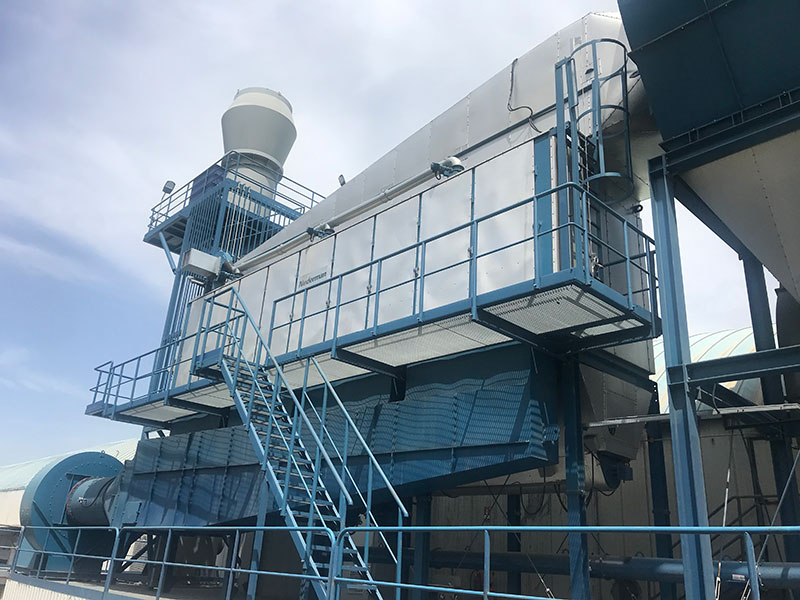
The FS series dust collector with horizontally installed flat bag filters is a compact and efficient filter system with intelligent air cleaning technology. It is ideal for high dust loads of finer dust particles and high gas temperatures.

For plant operators such as foundries, smelters and asphalt producers, the FS flat bag dust collector provides pollution control in a compact and easy-to-install package. The filter type FS is operated with efficient air purging: the purging air filter located behind the purging air fan provides an air pulse which inflates the flat bag during a cleaning cycle and creates an air flow against the filter direction.

Total cost of ownership

40%

Up to 40% space savings compared to typical baghouses

Elimination of compressed air for pulse cleaning

Increased bag life, up to 5 years, based on non-contact cleaning technology

Easy installation and transport to site, typically in a single container-sized flatbed delivery

Guaranteed low emissions

Low wear on parts, with oversight via IoT

Installed in hundreds of applications worldwide

Foundries

Melting and casting furnaces, magnesium treatment, molding lines, casting and cooling lines, shot blasting, casting finishing, sand preparation.

Steel mills

Electric arc furnace, secondary dedusting, flame cutting stations and flame cutting equipment.

Nonferrous metals

Aluminum melting furnaces, AlO2 transport and silos, anode fabrication, copper, copper alloys, magnesium, lead and zinc melting furnaces.

Asphalt

Dry drum, parallel drum, mixers, screens, silos, loading station.

Galvanizing plants

Galvanizing baths with edge extraction or enclosure.

Glass

Glass tanks, doghouses, glass fiber production, mineral and glass wool.

Family 2 — compressed air

Pulse jet dust collectors

A pulse jet dust collector is a dry filtration system that incorporates an integral media cleaning system. The media is usually a tubular vertical bag of varying diameter and length. Many bags sit inside a housing and particulate accumulates on the outside.

The cleaning system removes the accumulated cake by blowing high pressure compressed air into the inside of the bag. Nederman MikroPul is the home of the original pulse-jet cleaning patent, granted in 1957. Automated cleaning control systems regulate the pulse of compressed air the bags receive.

Modular pulse jet collectors

Fully assembled Mikro-Pulsaire™ pulse jet dust collectors are ideal for applications requiring filter media area generally between 151 and 8,246 ft². Three access configurations are offered, and the choice is driven by how your maintenance team needs to reach the bags.


  • Lift Off Top Bag Access: filter bags mount and change from the clean-air side of the tube sheet, reducing operator contact with dust; built to 17" w.g. (4,250 Pa) up to ASME high-pressure designs, with NFPA-compliant construction.
  • Walk-In Top Bag Access: modular design cuts field assembly, fits filter areas roughly 603–8,246 ft² (56–766 m²), and lets one person change a bag in about two minutes via a weather-protected work platform.
  • Bottom Bag Access: bags/cages remove from the dirty-air side, with options like sewn or fused needle-felt bags, stainless/aluminum venturis, and hinged access doors — all under the same 17" w.g.+ pressure ratings and NFPA safety treatment.

Multi-modular (sectional) pulse jet collectors

RAF II & RAF-IS — reliable cleaning without compressed air

For large applications, generally greater than 4,500 ft² (440 m²) media area, pulse jet baghouse collectors are provided in prewired sections sized to suit shipping limitations. Sub-assemblies can be prepared for bolting and/or welding on site. Compressed air cleaned, with a choice of camlock or snapband bag-to-tube-sheet connection for a leak-free seal.


  • Large-scale, sectional design: for applications over ~4,500 sq ft (440 m²) of media area, units ship as prewired sections and are bolted/welded together on site.
  • Wide range of applications: used on kilns, boilers, dryers, mixers, furnaces, smelters, and more, available in Top Access or Walk-in Access versions.
  • Built-in safety and durability: leak-free camlock/snapband connections, design pressures from 17" w.g. (4,250 Pa), and NFPA-compliant fire/explosion protection.

Round (cylindrical) pulse jet collectors

Nederman MikroPul's round pulse jet dust collectors are for high vacuum or high pressure applications, and are well suited to high internal or external static pressures. They are often chosen for applications requiring explosion protection, and for those with tangential inlets, which reduce bag loading.

On the Mikro-Pulsaire® HP series tangential inlet collector, the inlet acts as a cyclone: the air spins, driving heavy particulate to the walls and then into the hopper before it ever reaches the media. Design pressures range from 17″ w.g. (4250 Pa) up to ASME coded vessels.


  • High-pressure/vacuum design: round pulse jet dust collectors are built for high vacuum or high pressure applications and hold up well under high internal or external static pressures.
  • Applications & features: often used where explosion protection or tangential inlets are needed (reducing bag loading), across uses like spray drying, coal grinding, food manufacturing, and rail car loading.
  • Pressure range: design pressures run from 17" w.g. (4,250 Pa) up to ASME-coded vessels, with construction following NFPA fire/explosion safety standards.

Flat Bag Pulse Jet Filters

Fully assembled horzontal Nederman Mikropul pulse jet dust collectors, with filter area from 110m² - 2300m²

The filter with compressed air cleaning FD is fitted with stationary blowpipes and injection nozzles. Compressed air is supplied from compressed air containers with electromagnetic cleaning valves located outside the filter chambers. Typical applications are energy plants, biomass incinerations, crematory, small air volumes.


  • Compact, transport-friendly design: filter area ranges from 110m² to 2,300m², dimensions match truck geometry for lower transport costs, and units arrive fully preassembled with filter bags in a compact flat-bag layout.
  • Cleaning system & applications: stationary blowpipes and injection nozzles handle compressed-air cleaning, with valves mounted outside the filter chambers; typical uses include energy plants, biomass incineration, crematories, and small air-volume applications.
  • Maintenance & durability: horizontally mounted bags can be changed from the clean-gas side, a front maintenance platform gives easy access, the housing is fully welded, and it handles operating temperatures up to 250°C.

Ready for modernization or expansion?

Existing plants often need to meet new production requirements, stricter clean-gas expectations or changing conditions. We support:

  • Modernization of existing dust collectors
  • Expansion of installed systems
  • Retrofit to changed process requirements
  • Technical optimization of plant performance
Speak with an expert

Family 3 — reverse air tubular bag

Reverse air tubular bag filters

Key to the Reverse Air Filter's high reliability and performance is its simple, effective cleaning system. Bags are cleaned by high volume, low pressure reverse air every two minutes. It is designed for high reliability and operates with lower energy use than an equivalent pulse-jet cleaned system.


Reverse Air Filter II (RAF II)

The RAF II uses a continuous cleaning system, avoiding the need for compressed air and unreliable valves. Each bag is cleaned once every 120 seconds using the efficient reversed flow of processed air. This complete and systematic cleaning dramatically reduces the pressure drop across the media as well as the load demands on the complete fan system, and bag life is extended because of the cleaning method.

RAF uses two techniques to remove dust: cyclonic separation and media filtration, allowing larger particles to be removed easily before meeting the media. It also reduces the possibility that dust can collect inside the structure, lowering fire and explosion risk.

  • Save energy with low pressure drop, low fan HP and recycled clean air
  • Superior operating performance with integral cleaning fan
  • Easy maintenance with walk-in access, top bag removal and sectionalised tube sheets
  • Reduce maintenance costs — no valves, dampers, compressors or PD pump to maintain
  • Supported by MikroPul-Assist remote monitoring packages to improve site safety
  • All installed RAF II and RAF-IS filters can be retrofitted with MikroPul-Assist

RAF-IS for combustible dust

The RAF-IS Reverse Air Filter is specifically designed for highly combustible dust and high temperature applications, and is ideally suited to coal (including PRB), wood and agro material filtration. It combines high performance, low energy use and reliable reverse-air cleaning in a ledge-less filter housing totally free of internal electrical components.

Speak with an expert

Gas-phase treatment

Additive dosing: when filtration alone is not enough

A baghouse captures particulate. It does not, on its own, capture acid gases, dioxins or mercury. Additive dosing injects an adsorbent upstream of the collector so the gas-phase pollutant is converted or bound to a solid, and then removed as ordinary dust.

The addition of the adsorbent takes place on the pneumatic way. The hydrated lime is taken out of a silo through a slide gate, a rotary valve and a screw conveyor. In an intermediate vessel the adsorbent is weighed and blown into the ductwork. The dosing quantity can be adjusted by a frequency drive so that the necessary amount of adsorbent can be adapted.

Three uses of additive

1

Chemical reaction

Mostly eliminates acidic pollutants such as sulphurous acid (SO₂), hydrochloric acid (HCl) or hydrofluoric acid (HF). Almost exclusively lime-based products are used here, such as hydrated lime or sodium bicarbonate.

2

Adsorption

For reducing volatile hydrocarbons, dioxins and mercury. Products such as activated carbon or hearth furnace coke are used; the disadvantage is the explosiveness of these substances. A mixture of carbohydrate and activated carbon may be employed, or a zeolite material. These additives bind the substances above through a very porous structure of about 1000 m²/g. There is no chemical reaction, but a purely physical binding.

3

Binder for oily exhaust air

Construction lime or stone meal, giving a protective layer for filter bags made of needle felt, or for cartridges.

Sorption of acidic gases

Often from thermal furnace processes. All acids are chemically converted to salts, which can then be cleaned and disposed of in the filter system as a normal dust filtration process.

Calcium chloride

Ca(OH)₂ + 2HCl → CaCl₂ + 2H₂O

Calcium sulphite

Ca(OH)₂ + SO₂ → CaSO₃ + H₂O

Calcium sulphate dihydrate (Gypsum)

CaSO₃·H₂O + ½O₂ + H₂O → CaSO₄·2H₂O

Calcium fluoride

Ca(OH)₂ + 2HF → CaF₂ + 2H₂O

Calcium carbonate

Ca(OH)₂ + CO₂ → CaCO₃ + H₂O

Expert Support from Start to Finish

Consultation and Design

Our team of experts will assess your facility and processes to design a baghouse dust collector that meets your specific needs.

Installation Services

Professional installation ensures your system operates efficiently from day one.

After-Sales Support

We offer ongoing maintenance, replacement parts, and technical support to keep your system running at peak performance.

Nederman MikroPul is committed to providing top-of-the-line baghouse dust collectors that enhance air quality and operational efficiency. Trust us to deliver solutions that not only meet but exceed your expectations.

Speak with an expert

Common things to know

Frequently Asked Questions

Answers to common questions about industrial dust collectors

Loading component...

Loading component...

Loading component...

Loading component...

Loading component...

Loading component...

Let's Solve Your Problems

Talk to a Process Technology Expert Today

Connect with Nederman MikroPul to improve your dust collection.

Loading component...

Last updated: August 2026